Cruise Cabin Types Explained: How to Choose the Right One

Cruise Cabin Types Explained: How to Choose the Right One

Why Choosing the Right Cruise Cabin Matters

Choosing the right cruise cabin can make the difference between a good cruise and a great one. Inside, oceanview, balcony, suites… and then dozens of cabin categories layered on top. It’s no wonder many first-time cruisers worry about making the wrong choice.

The good news? There isn’t one “best” cruise cabin. There’s only the best cabin for your priorities, budget and itinerary.

Cruise ships typically offer four main types of cabins: inside cabins, oceanview cabins, balcony cabins and suites. Within each type, location and layout can vary, which is where much of the confusion begins. A midship inside cabin on a lower deck will feel very different from a forward balcony cabin high above the waterline — even though both are technically just “rooms.”

In this guide, we’ll break down the different cruise ship cabin types in simple, practical terms. You’ll learn:

  • What each cabin type actually feels like

  • The pros and cons of inside vs oceanview vs balcony cabins

  • Why cabin location matters more than many people realise

  • Common first-time cruiser mistakes to avoid

By the end, you’ll have a clear understanding of which cruise cabin suits your travel style — whether you prioritise budget, natural light, private outdoor space or extra room to spread out.

Let’s start with the four core cruise cabin types and what makes each one unique.
The Main Types of Cruise Cabins

Nearly every mainstream cruise line follows this same four-tier structure — even if the category names differ.

Understanding these main cruise cabin types makes it much easier to navigate deck plans and pricing categories later on.

The Four Core Cruise Cabin Types:

  • Inside Cabins – No window or balcony, typically the most budget-friendly option.

  • Oceanview Cabins – A window or porthole provides natural light and sea views.

  • Balcony Cabins – A private outdoor space with sliding doors and seating.

  • Suites – Larger accommodations with additional space, perks and upgraded amenities.

At first glance, the difference between these cruise ship cabin types seems simple: no window, window, balcony, or suite. In reality, there are meaningful differences in space, layout, location and overall experience that can affect how your cruise feels.

In the sections below, we’ll break down each cabin type in practical terms — who it suits, when it’s worth the upgrade, and what first-time cruisers often misunderstand.

Let’s start with the most affordable option: inside cabins.

Inside Cabins: The Smart Budget Choice?

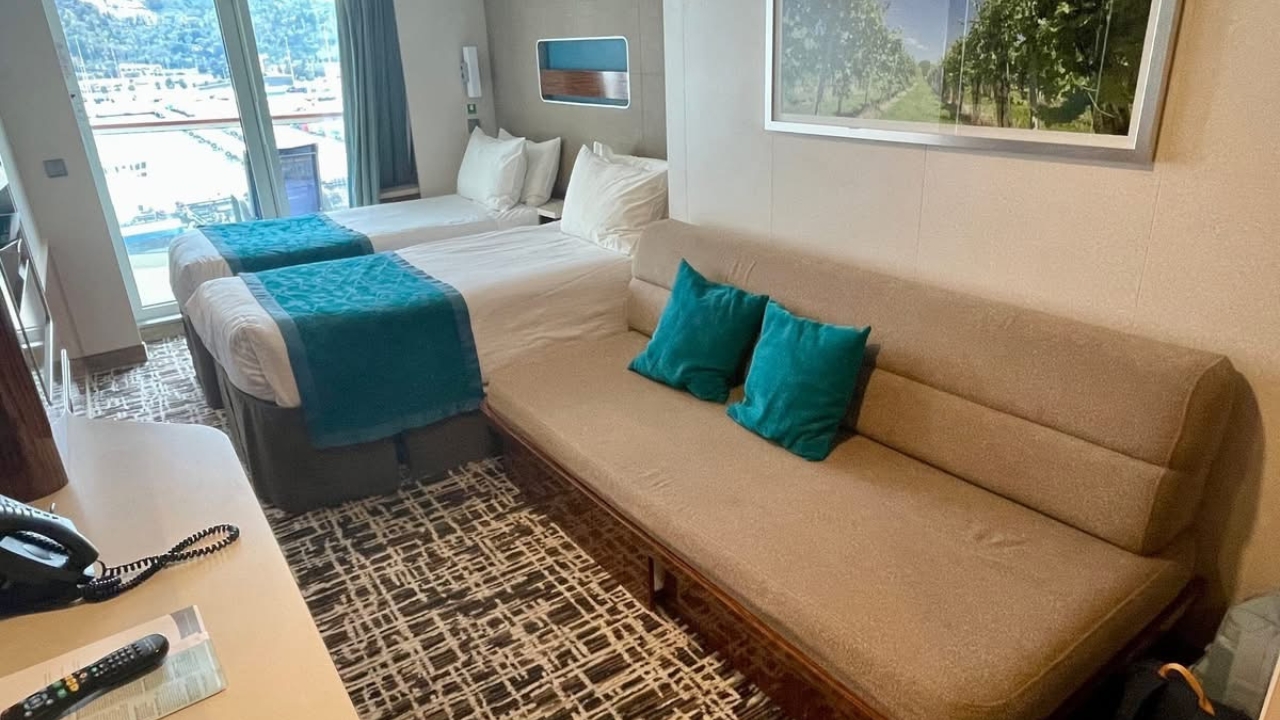
Inside cabins (sometimes called interior cabins) are the most affordable of all cruise cabin types. They have no window and no balcony — just a fully enclosed space designed for sleeping, showering and changing between activities.

For many cruisers, especially first-timers, that sounds like a downside. In reality, inside cabins are often a very smart choice. On modern ships, inside cabins still offer the same comfortable beds, private bathrooms and daily housekeeping as higher categories.

Most cruise ships are designed so that you spend very little time in your cabin. You’re out exploring ports, enjoying sea days, eating, watching shows or relaxing on deck. If your cabin is mainly a comfortable place to sleep and recharge, an inside cabin can deliver excellent value.

Why Some Cruisers Prefer Inside Cabins

  • Lower price point – Often hundreds less than balcony cabins on the same sailing.

  • Darker for sleeping – No natural light means no early sunrise wake-ups.

  • Quieter overall – Fewer external noise factors like wind or balcony doors.

  • Encourages you to use the ship – You’re less tempted to hide away.

That said, they aren’t perfect for everyone.

When an Inside Cabin Might Not Suit You

  • If natural light matters to you.

  • If you like fresh air in the morning.

  • If you plan to spend long stretches in your room.

  • If you’re prone to feeling confined in small spaces.

For budget-focused travellers or port-intensive itineraries, inside cabins can be an excellent way to cruise without overspending. For scenic sailings or special occasions, however, you may feel the upgrade is worth it.

Next, let’s look at the middle ground: oceanview cabins.
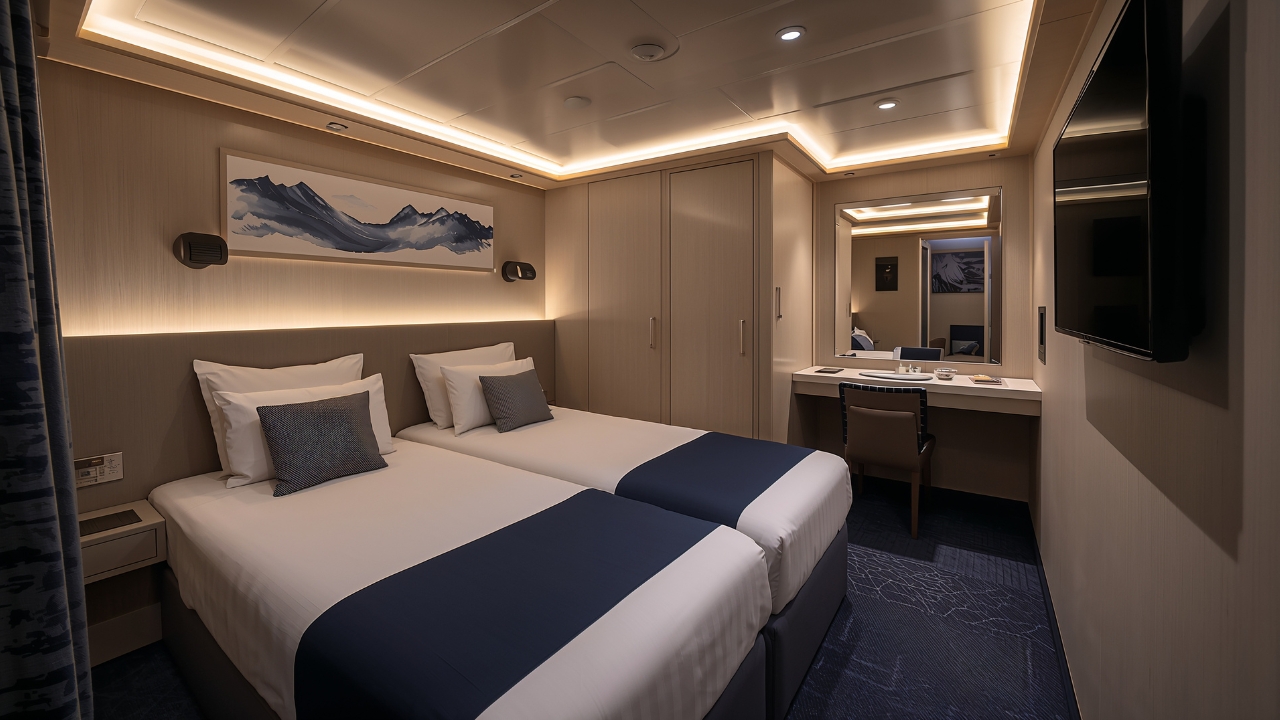
Oceanview Cabins: A Balance of Light and Value

Oceanview cabins sit between inside cabins and balcony cabins in both price and experience. Instead of an enclosed space, you’ll have a window or porthole that lets in natural light and offers a view of the sea. On some ships, oceanview cabins sit lower in the hull, closer to the waterline — which can feel cosy and stable, but offers a different perspective than higher decks.

For many first-time cruisers, this feels like the “safe” option — not the cheapest, not the most expensive, but comfortably in the middle.

The biggest difference you’ll notice compared to an inside cabin is light. Waking up to daylight rather than a dark room can make the space feel larger and more open. Even if you don’t spend hours looking out at the ocean, that visual connection to the outside world changes the feel of the cabin.

Why Oceanview Cabins Appeal to Many Cruisers

  • Natural light without the jump in price to a balcony

  • Clear sea views for sail-ins and sail-outs

  • A more open feel compared to inside cabins

  • Often available on mid-level decks at moderate prices

However, it’s important to understand what you’re not getting.

Oceanview cabins do not have outdoor access. You can’t step outside for fresh air, and you won’t have private seating like a balcony cabin offers. On some ships, windows may be smaller than expected, and certain oceanview cabins may even have partially obstructed views.

When an Oceanview Cabin Makes Sense

  • You want natural light but don’t need private outdoor space.

  • You’re cruising somewhere scenic but plan to explore the ship.

  • You’d feel uncomfortable in a fully enclosed cabin.

  • You want a middle-ground option without a significant budget increase.

For many travellers, oceanview cabins strike the right balance between comfort and cost — particularly on itineraries where you’ll be out exploring most of the day.

Next, let’s look at the cabin type many cruisers aspire to: balcony cabins.
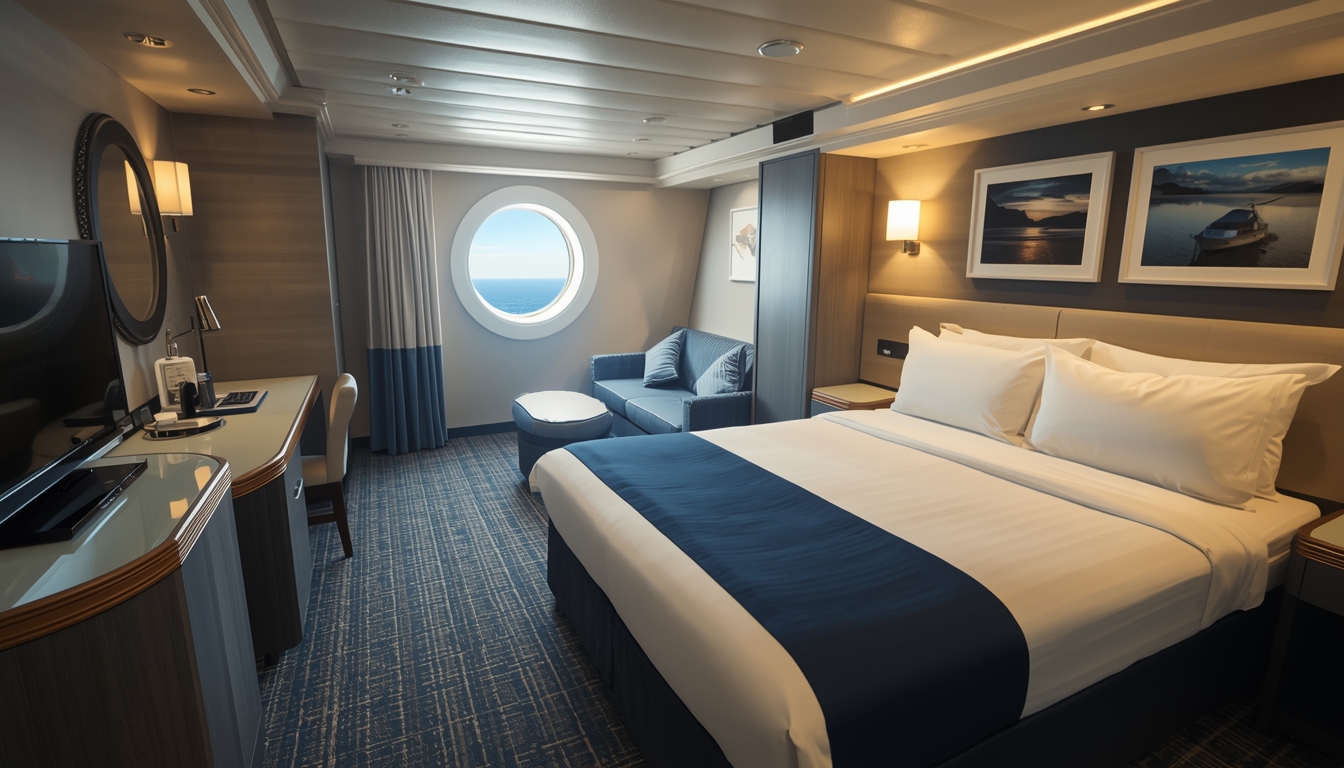
Balcony Cabins: Space, Fresh Air and a Private Retreat

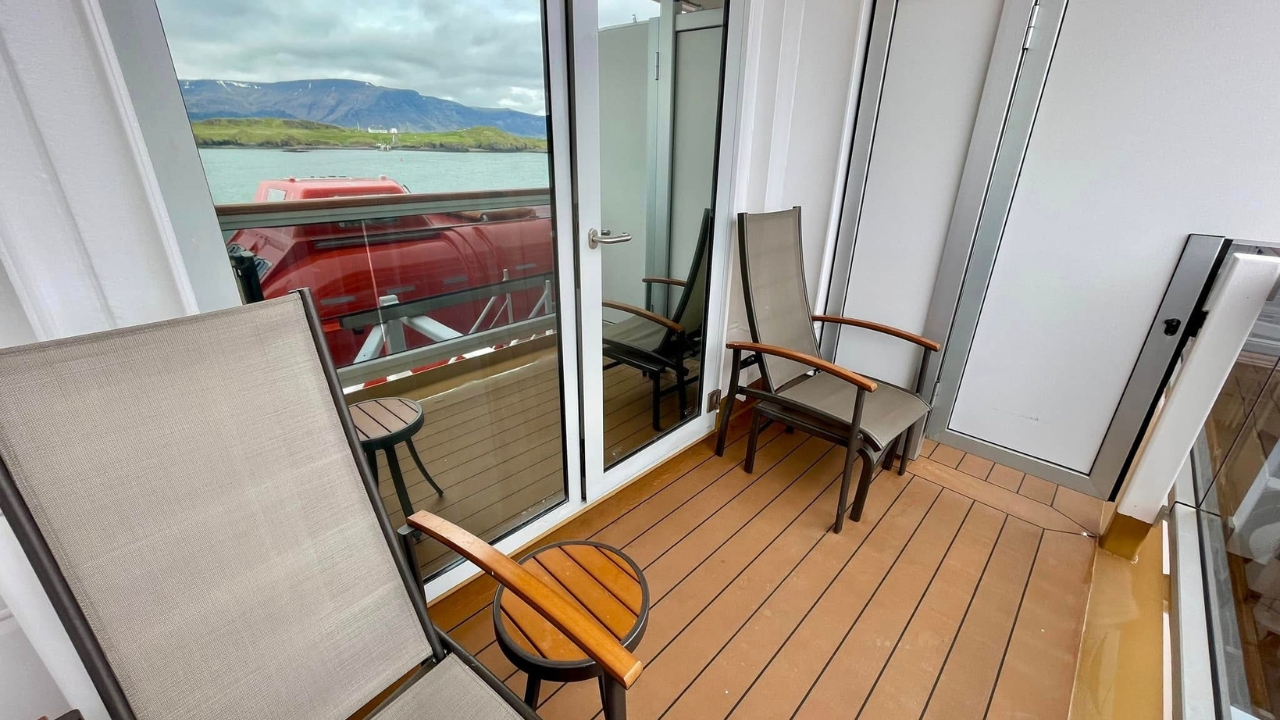
Balcony cabins are often the most talked-about option — and for good reason. A sliding door opens onto your own private outdoor space, usually with two chairs and a small table. It may not be large, but it changes the feel of your cruise entirely.

If you’ve never had one, it’s easy to wonder whether it’s really worth the price difference.

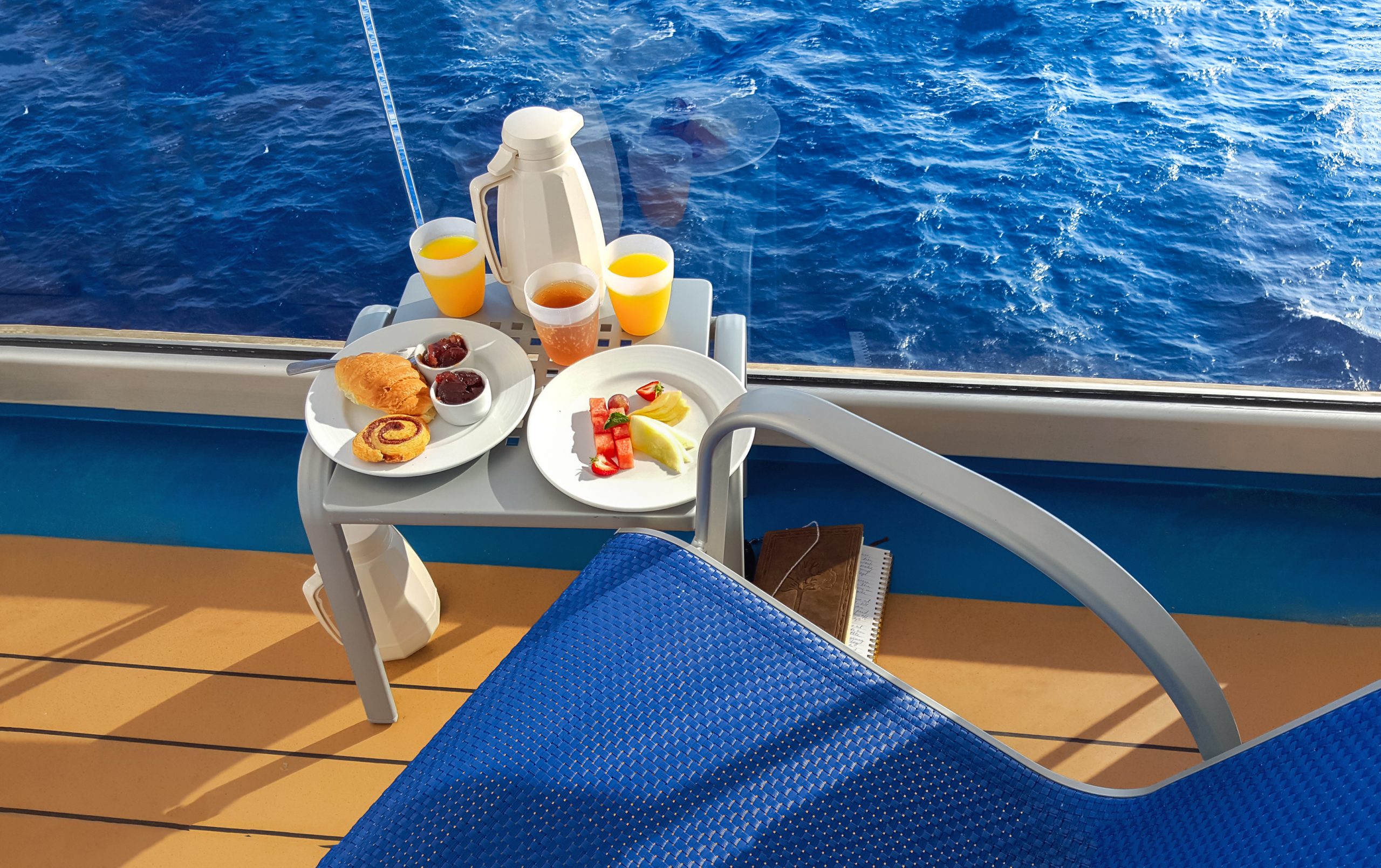
After dozens of sailings, we’ve found the added space consistently enhances the experience — particularly on scenic itineraries. A balcony adds something intangible: space to breathe. Morning coffee in your own quiet corner. Watching sail-ins without fighting for deck space. Stepping outside in the evening instead of heading to a crowded bar.

It’s not just about the view. It’s about having a retreat.

Why Many Cruisers Prefer Balcony Cabins

  • Private outdoor space anytime you want it

  • Fresh air and natural light without leaving your cabin

  • Ideal for scenic itineraries like fjords, Alaska or sail-ins to historic ports

  • A quiet place to unwind away from busy public areas

That said, balconies aren’t automatically the right choice for everyone.

They do come at a noticeable price increase compared to inside and oceanview cabins. On port-heavy itineraries where you’re rarely in your room, you may not use it as much as you expect. And while they feel private, they are not completely enclosed — neighbours can sometimes see portions of your space depending on the ship’s design.

When a Balcony Cabin Is Worth It

  • You value quiet time away from crowds.

  • You’re sailing somewhere scenic.

  • You enjoy slow mornings or sunset views.

  • This is a special trip and you want that added comfort.

For many travellers — ourselves included — once you’ve experienced a balcony cabin, it’s hard to go back. But the right choice always depends on how you cruise and what you value most.

Next, let’s look at suites and what makes them different from standard balcony cabins.
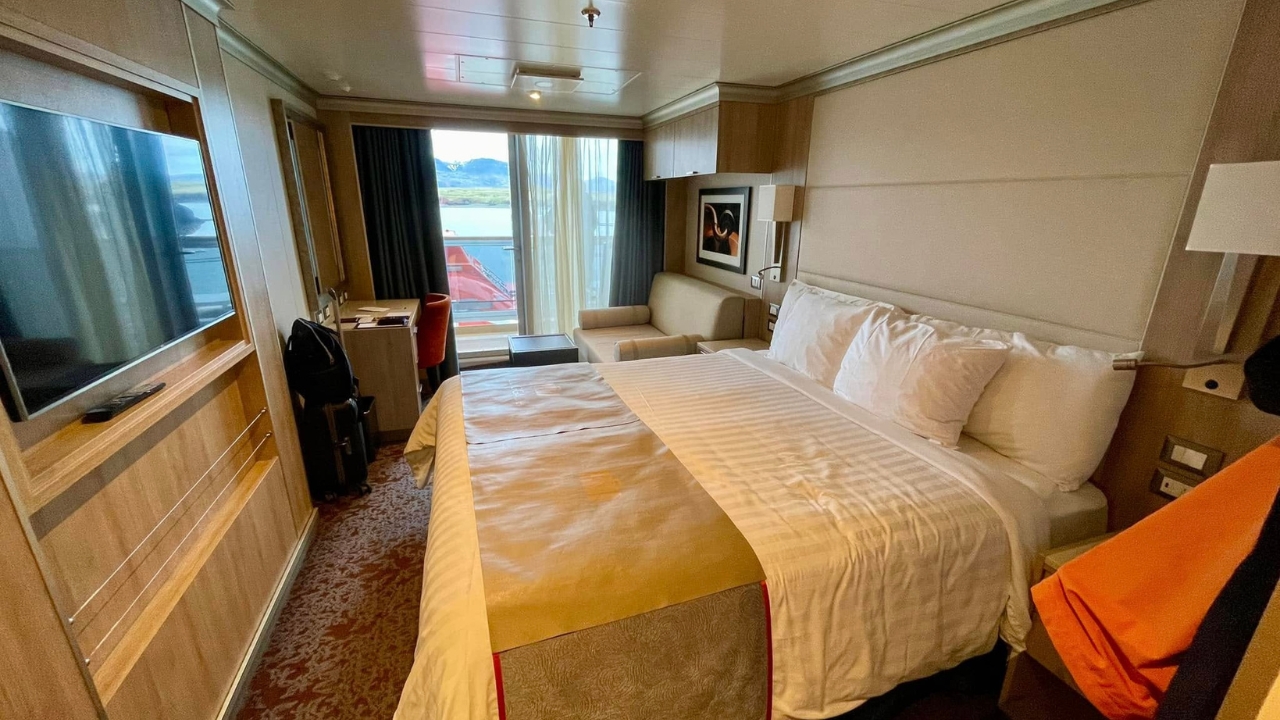
Suites: More Space, More Perks — But Not Always Necessary

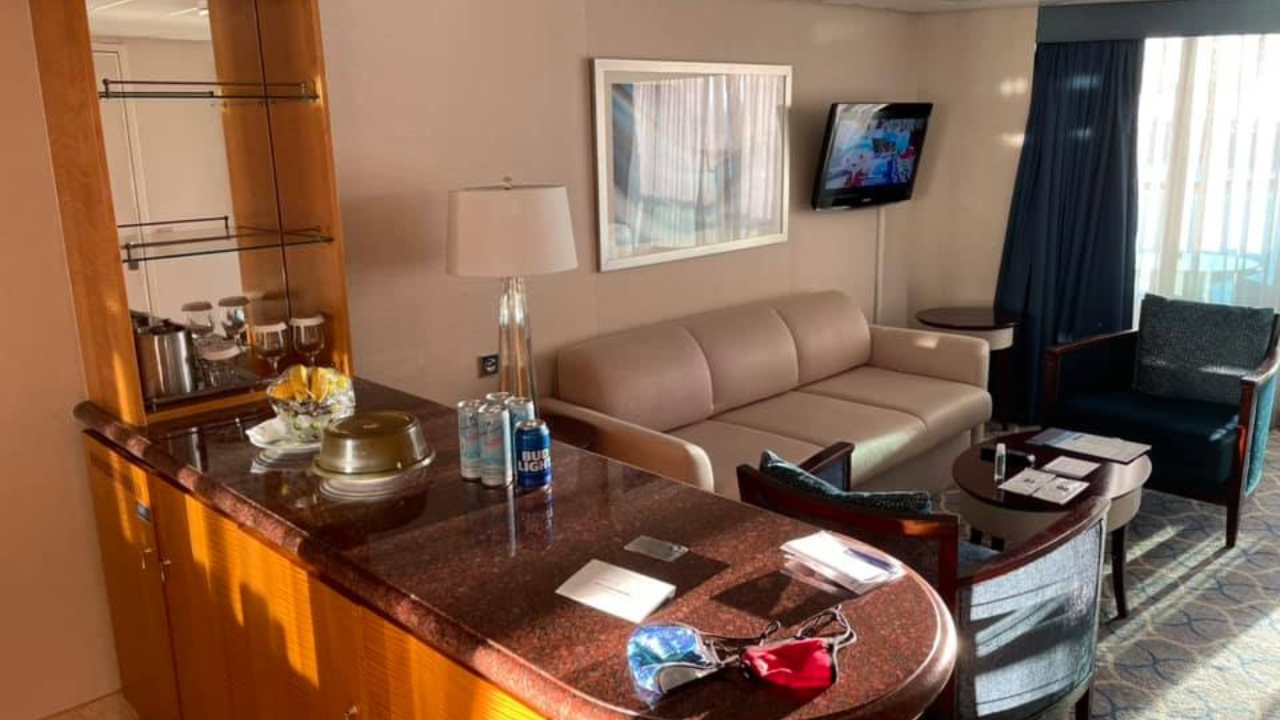
Suites sit at the top end of most cruise ship cabin types. They offer more square footage, larger balconies (in most cases), and additional perks — but the level of luxury varies widely depending on the category.

This is where cruise lines start using labels like Junior Suite, Mini Suite, Grand Suite, Owner’s Suite and beyond. The names can sound similar, but the experience can be very different.

Junior or Mini Suites

Despite the word “suite,” these are often closer to larger balcony cabins.

You may get:

  • A bit more floor space

  • A larger bathroom or upgraded shower

  • A slightly bigger balcony

  • Sometimes priority boarding or small perks

However, on many cruise lines, junior suites do not include full suite benefits like concierge access or exclusive lounges.

They’re best thought of as an upgraded balcony rather than a true suite experience.

Full Suites (Grand, Owner’s, etc.)

These cabins offer significantly more space and usually include added benefits such as:

  • Priority embarkation and disembarkation

  • Access to concierge services

  • Exclusive lounges or sun decks (on some lines)

  • Premium dining or beverage perks

  • Larger living areas and separate seating spaces

On certain cruise lines, especially premium or luxury brands, suite guests may also receive enhanced service and additional inclusions.

But here’s the practical truth: you’re paying substantially more for that extra space and convenience.


When a Suite Makes Sense

  • You value space above all else.

  • You’re travelling as a family and need room to spread out.

  • You plan to spend more time in your cabin.

  • You want the added convenience of priority services.

  • This is a milestone or celebratory cruise.

For many cruisers, a suite is a wonderful indulgence — but it isn’t necessary to enjoy a cruise fully. Most of the ship’s experiences remain the same regardless of cabin category.

In short, suites offer more comfort and convenience, not a completely different cruise.

Next, let’s look at something that can matter just as much as cabin type: location.
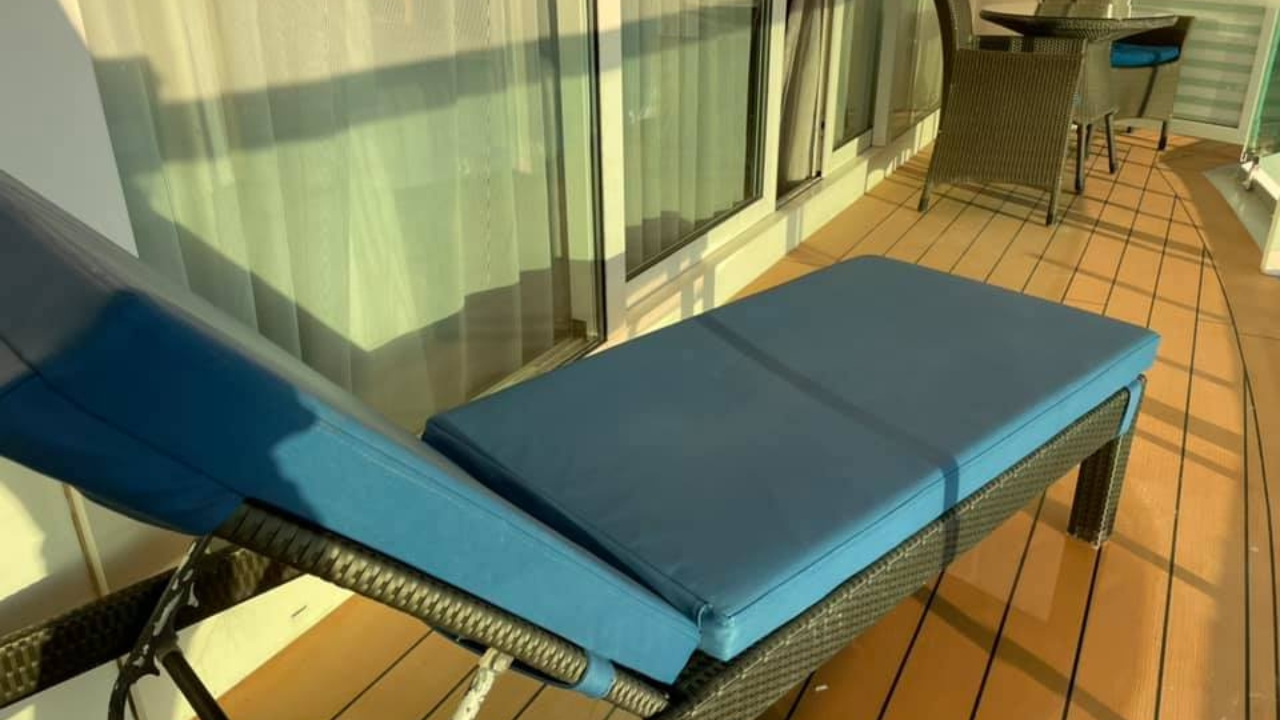
Cabin Location Matters More Than Many First-Time Cruisers Realise

Once you’ve chosen between inside, oceanview, balcony or suite, there’s another decision that can affect your comfort just as much: location.

Two cabins in the same category can feel very different depending on where they sit on the ship.

Here’s what to consider.


Forward vs Midship vs Aft

Forward (front of the ship)
Cabins at the front often feel the most motion, particularly in rougher seas. You may also notice more wind noise on balcony cabins. That said, some cruisers love forward-facing views and the sense of being “at the front of the action.”

Best for:

  • Experienced cruisers

  • Those not prone to motion sensitivity

  • Travellers who prioritise views over stability


Midship (centre of the ship)
Midship cabins tend to feel the most stable because they sit near the ship’s centre of gravity. If you’re concerned about seasickness, this is usually the safest choice.

Best for:

  • First-time cruisers

  • Anyone worried about motion

  • Travellers who want convenience to lifts and stairs


Aft (rear of the ship)

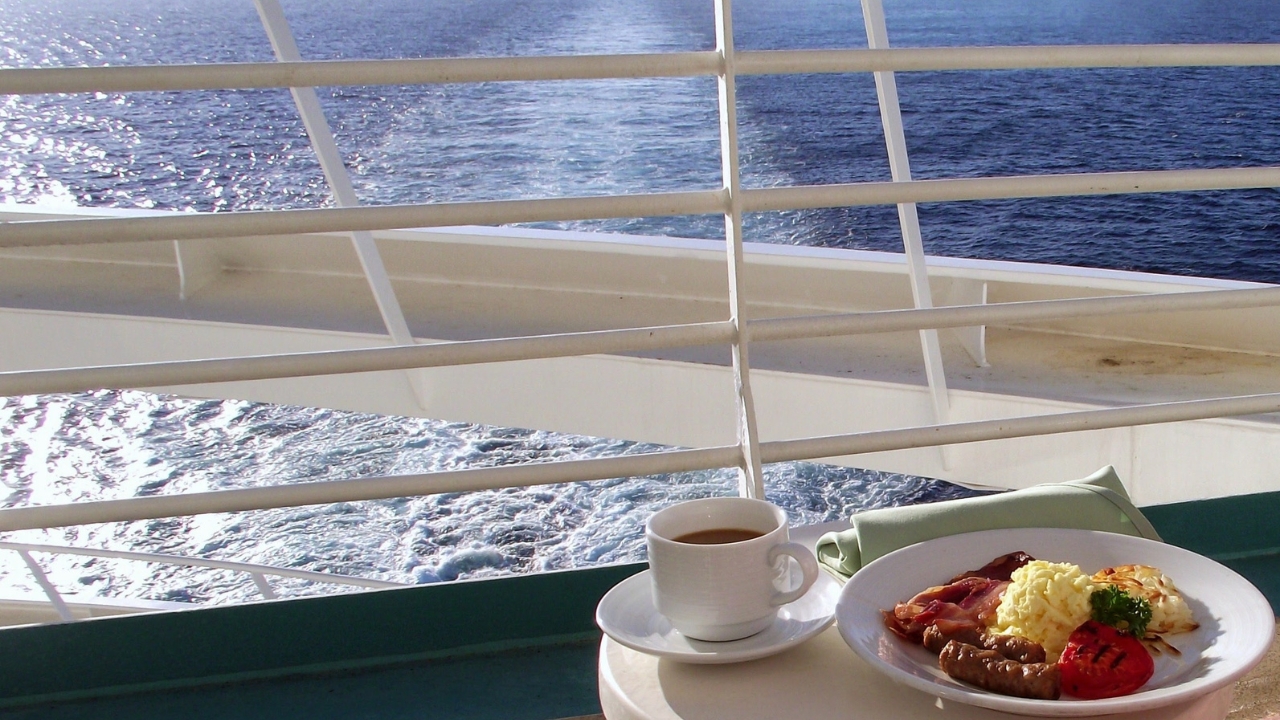
Aft cabins can offer some of the most beautiful views at sea. Watching the ship’s wake stretch out behind you — especially at sunset — is genuinely special. On some ships, aft balconies are also slightly larger than standard side-facing balconies.

However, there are a few practical considerations that don’t always get mentioned.

Depending on the ship’s design and the placement of funnels (smokestacks), aft balconies can occasionally experience light soot or exhaust residue. It’s not constant, but we’ve experienced fine black particles settling on balcony furniture, towels or clothing left outside. It’s usually minor — but it’s worth knowing before you hang out freshly washed swimwear.

You may also notice:

  • Slight vibration from engines on certain ships

  • More motion in rougher seas compared to midship

  • Longer walks to lifts and central venues

Best for:

  • Scenic itineraries

  • Cruisers who enjoy wake views

  • Those willing to research deck plans carefully

If you love a view and don’t mind a little extra research beforehand, aft cabins can be wonderful. But they’re not automatically “better” — just different.
High Deck vs Low Deck

Cabins on higher decks are often closer to pools, buffets and outdoor areas. That can be convenient — but also noisier.

Lower decks tend to feel more stable in rougher seas and are often quieter overall, particularly if they are sandwiched between other cabin decks.

A simple rule of thumb:
If you’re unsure, choose a cabin that has other cabins above and below it, rather than public spaces.


Above or Below Noisy Areas

This is one of the most common mistakes first-time cruisers make.

Cabins directly below:

  • Pool decks

  • Sun loungers

  • Buffet areas

  • Gym spaces

…can experience early morning scraping of chairs, foot traffic and general activity noise.

Similarly, cabins above nightclubs, theatres or late-night venues may hear music or crowd noise.

Always check the deck plan before confirming your cabin location. A slightly cheaper cabin isn’t a bargain if it costs you sleep.


Motion Sensitivity

If you’re concerned about seasickness:

  • Choose midship

  • Opt for a lower deck

  • Avoid forward-facing cabins

  • Consider a cabin close to lifts to reduce walking during rough seas

That said, modern cruise ships are designed with stabilisers, and most sailings are smooth. Many first-time cruisers worry more about motion than they end up experiencing.


Choosing the right cruise cabin isn’t just about size or balcony access — it’s about location, comfort and how you plan to use your space.

Now that you understand cabin types and location, let’s simplify the decision even further.
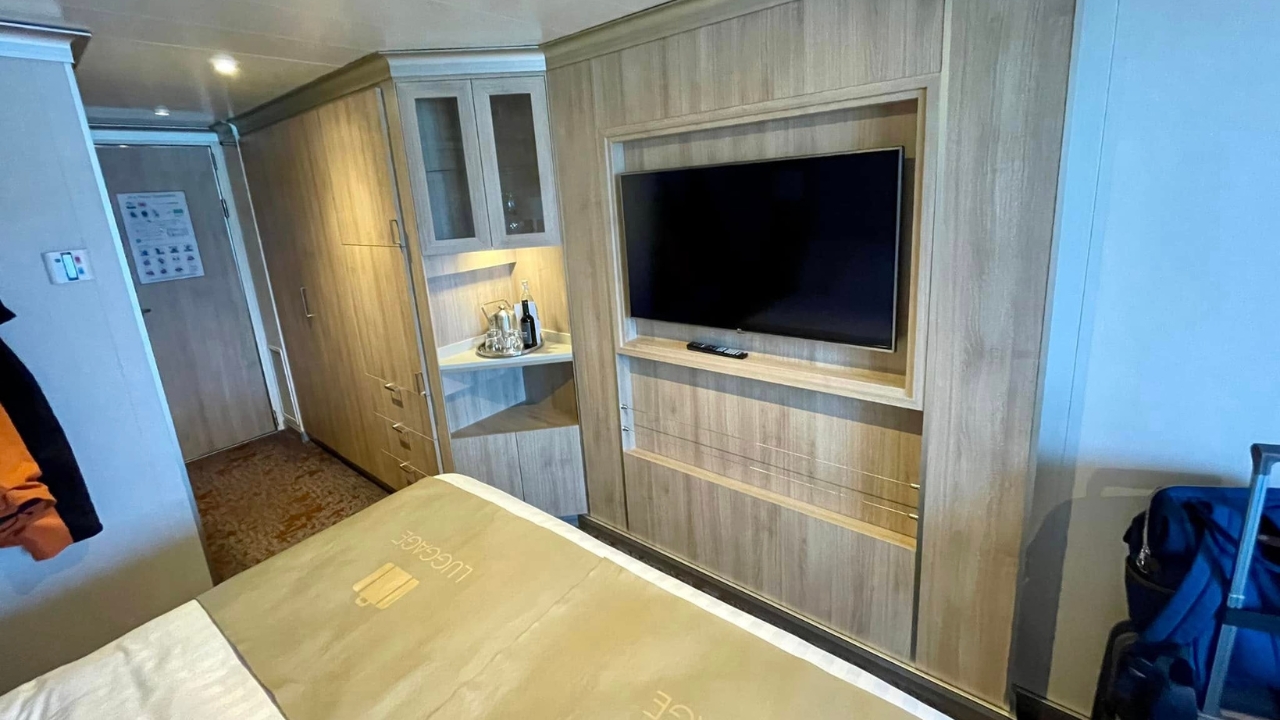
Which Cruise Cabin Should You Choose? A Simple Decision Guide

After all the comparisons, deck plans and cabin categories, the decision often comes down to one simple question:

What matters most to you on this cruise?

There isn’t a universally “best” cruise cabin. There’s only the best choice for your priorities, budget and itinerary.

Here’s a simple way to narrow it down.


Choose an Inside Cabin If…

  • You’re cruising on a budget and want to prioritise experiences over room space.

  • You plan to spend most of your time exploring the ship and ports.

  • You sleep best in complete darkness.

  • This is your first cruise and you’d rather test the waters without overspending.

Inside cabins are often the smartest value choice, especially on port-heavy itineraries.


Choose an Oceanview Cabin If…

  • Natural light matters to you.

  • You’d feel uncomfortable in a fully enclosed space.

  • You want sea views without paying for a balcony.

  • You’re looking for a balanced middle-ground option.

Oceanview cabins offer comfort and light without a major price jump.


Choose a Balcony Cabin If…

  • You enjoy quiet time away from crowds.

  • You’re sailing somewhere scenic.

  • You like having fresh air and private outdoor space.

  • This trip feels special and you want that added comfort.

For many cruisers, a balcony adds a sense of space that’s hard to go back from — but it’s a lifestyle choice, not a requirement.


Choose a Suite If…

  • Space and comfort are top priorities.

  • You’re travelling as a family or for a celebration.

  • You value priority boarding and added perks.

  • Budget is less of a constraint.

Suites enhance convenience and comfort, but they don’t fundamentally change the cruise experience itself.

📊 Cruise Cabin Types Comparison Table

You can introduce it with one short line:

Here’s a simple side-by-side comparison of the main cruise cabin types:

🛏 Cruise Cabin Types at a Glance

Cabin Type Natural Light Private Outdoor Space Typical Size Price Level Best For
Inside Cabin ❌ No ❌ No Smallest £ Budget travellers, port-heavy itineraries
Oceanview Cabin ✅ Yes (window) ❌ No Small–Medium ££ First-time cruisers, those wanting light without balcony cost
Balcony Cabin ✅ Yes ✅ Yes Medium £££ Scenic itineraries, sea days, added comfort
Suite ✅ Yes ✅ Yes (larger) Largest ££££ Families, special occasions, extra space & perks

🛏 Inside Cabin

Natural Light: ❌ No
Private Outdoor Space: ❌ No
Typical Size: Smallest
Price Level: £
Best For: Budget travellers, port-heavy itineraries

🛏 Oceanview Cabin

Natural Light: ✅ Yes (window)
Private Outdoor Space: ❌ No
Typical Size: Small-Medium
Price Level: ££
Best For: First-time cruisers, those wanting light without balcony cost

🛏 Balcony Cabin

Natural Light: ✅ Yes
Private Outdoor Space: ✅ Yes
Typical Size: Medium
Price Level: £££
Best For: Scenic itineraries, sea days, added comfort

🛏 Suite

Natural Light: ✅ Yes
Private Outdoor Space: ✅ Yes
Typical Size: Large
Price Level: ££££
Best For: Families, special occasions, extra space & perks

One Final Tip

If you’re unsure, prioritise location over minor cabin upgrades.

A well-positioned midship balcony cabin between two cabin decks will usually feel more comfortable than a slightly larger cabin under the pool deck.

Cabin type matters — but location can matter just as much.
What Life on a Cruise Ship Is Really Like (Common Worries Answered)

What Life on a Cruise Ship Is Really Like (Common Worries Answered)

Intro

If you’ve never cruised before, it’s easy to imagine extremes.

Too crowded. Too noisy. Too many germs. Too much drinking. Too little to do.

Photos online don’t always help. They show highlights — not everyday reality.

So what is life on a cruise ship actually like?

After more than 50 cruises between us, here’s the honest version. Calm. Balanced. And far less dramatic than you might think. If this is your first cruise and you’re still working through the basics, our calm first-time cruise guide walks through what actually matters — and what doesn’t.

Don’t You Get Bored?

This is one of the most common questions we’re asked.

Modern cruise ships aren’t small vessels with little to do. They’re closer to floating resorts. There are shows, talks, fitness classes, cafés, pools, quiet lounges, live music, deck walks, reading corners — and that’s before you even leave the ship.

But here’s the important part:

You don’t experience it all at once.

Within a day or two, you settle into your own rhythm. A favourite coffee spot. A preferred deck for sunset. A lounge that feels comfortable.

You’re not expected to fill every hour.

Some sea days are busy. Some are slow. Most sit comfortably in between.

Boredom isn’t usually the issue.

Over-planning sometimes is.

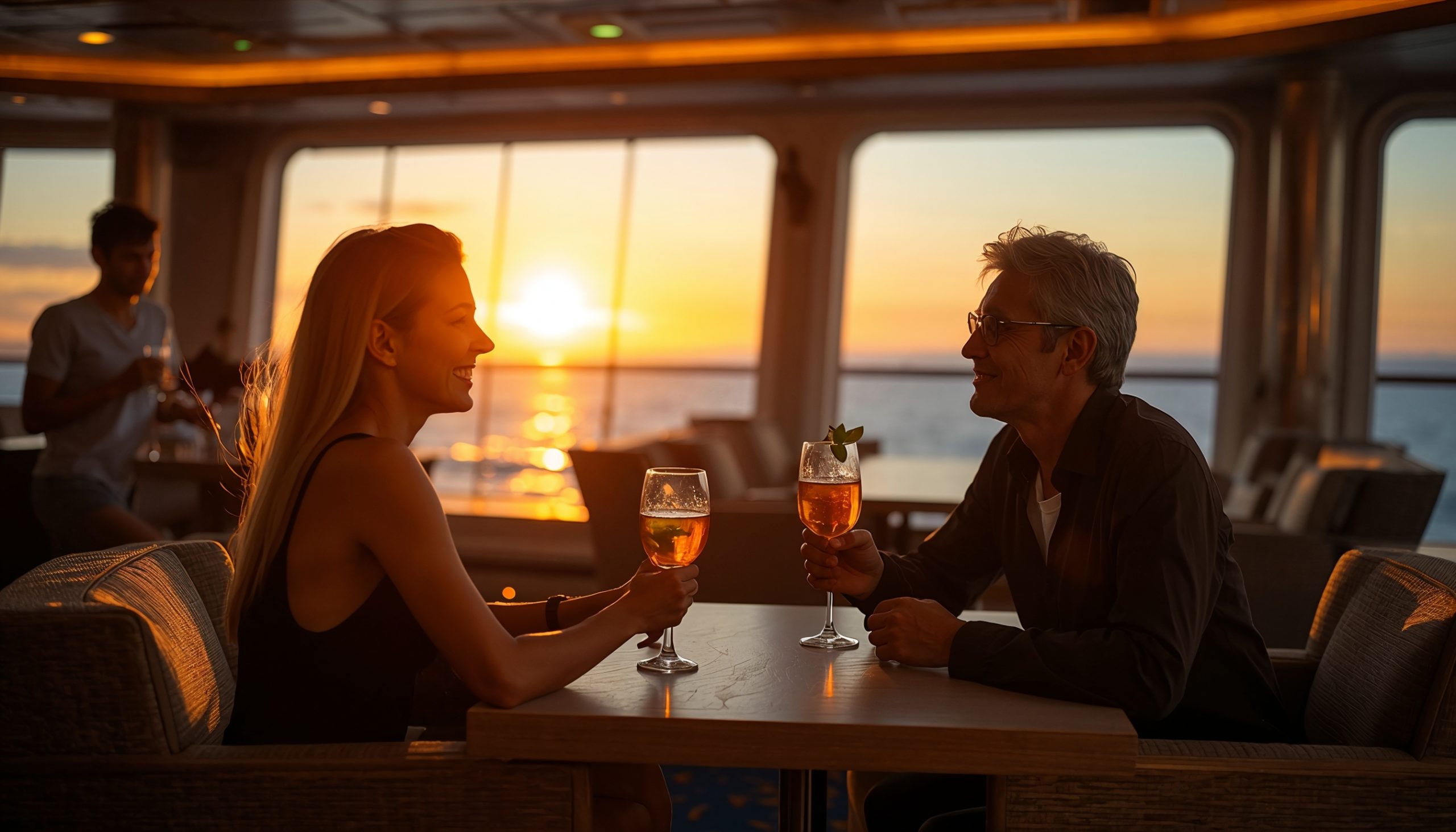
Couple enjoying drinks in a relaxed cruise ship lounge at sunset

Do You Get Seasick?

In over 50 cruises, one of us has felt mildly seasick once. The other never has.

Modern cruise ships are remarkably stable, especially the larger ones. They’re fitted with advanced stabilisers designed specifically to reduce motion.

That doesn’t mean you’ll never feel movement. In rough weather, you might notice a gentle sway. But for most sailings, especially in calmer regions, it’s barely noticeable.

If you’re particularly prone to motion sickness, there are simple precautions you can take — and we’ve covered those in more detail in our guide to managing seasickness.

For most people, it’s a worry that fades quickly once onboard.

Aren’t Cruise Ships Full of Germs?

Cruise ships are probably more hygiene-conscious than many land-based resorts.

You’ll see hand-washing stations at buffet entrances. Crew regularly wipe down stairwell banisters, lift buttons, railings and shared surfaces. Hand sanitiser stations are everywhere — especially when embarking and returning from port.

Hygiene isn’t an afterthought. It’s operationally embedded.

Like any shared space — hotels, restaurants, airports — sensible precautions matter. But the idea that cruise ships are uniquely unhygienic doesn’t reflect what you actually see onboard.

If anything, the visibility of cleaning efforts tends to reassure rather than alarm.

Are Cruise Ships Full of Drunken Parties?

Some cruise lines have a livelier reputation than others.

And yes — there are pool bars, themed nights and the occasional enthusiastic dance floor.

But that’s rarely the whole picture.

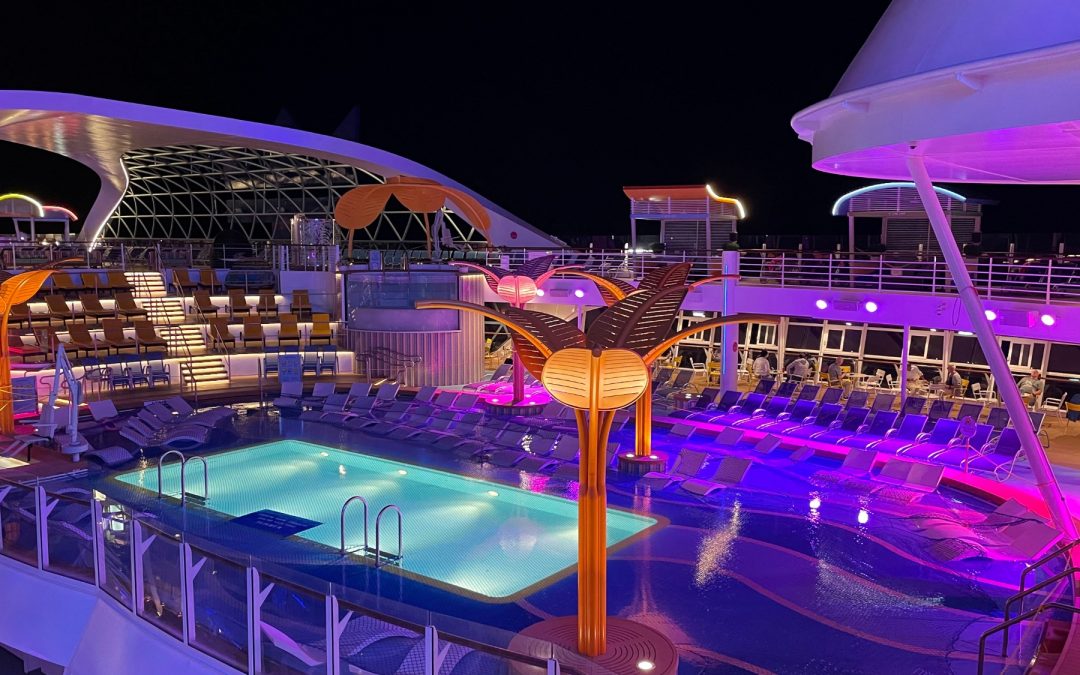
Cruise ships are layered environments. The lively pool deck in the afternoon sits just a short walk from a quiet observation lounge. A busy sail-away party doesn’t prevent a calm dinner or a peaceful top-deck sunset.

We enjoy a drink onboard — our logo probably gives that away — but we’ve never found cruising to feel chaotic unless you deliberately seek that atmosphere.

Even on lines known for energy, there are always calmer spaces.

The key is choosing the cruise line — and the onboard spaces — that suit your style.

Will I Feel Overwhelmed on a Big Ship?

Large ships can look intimidating in photos.

Multiple decks. Long restaurant lists. Packed activity schedules.

But onboard, the experience feels far more manageable.

Ships are designed in “neighbourhoods.” You move through them gradually. Within a couple of days, the layout feels familiar.

And something else happens.

You start recognising the crew. They recognise you. A barista remembers your coffee order. A waiter greets you by name. Small interactions make a large ship feel surprisingly personal.

You don’t need to attend every activity. You don’t need to try every restaurant.

Big doesn’t mean overwhelming.

It usually just means more choice — and more space to find your own pace.

What a Typical Sea Day Actually Feels Like

Sea days are often misunderstood.

People imagine non-stop activity — or complete boredom.

Most sea days settle somewhere comfortably in between.

Mornings tend to feel unhurried. Coffee on deck. A quiet walk. A glance at the daily programme — not to plan every minute, but to see what appeals.

Some people head to the gym at 6am. Others sleep in. Both feel normal.

Throughout the day, shops stay open. The casino hums quietly in the background. Spa appointments fill up. There might be a cooking demonstration, an enrichment talk, or even a towel-folding lesson.

Or none of it.

Afternoons can mean a swim, a book, a nap, or simply watching the horizon.

There’s no packing. No rushing ashore. No timetable to beat. And when your ship is in port, deciding whether to head ashore or enjoy that same calm onboard rhythm can be just as important.

Sea days aren’t about filling time.

They’re about enjoying the absence of pressure.

For many cruisers, they become the most unexpectedly relaxing part of the trip.

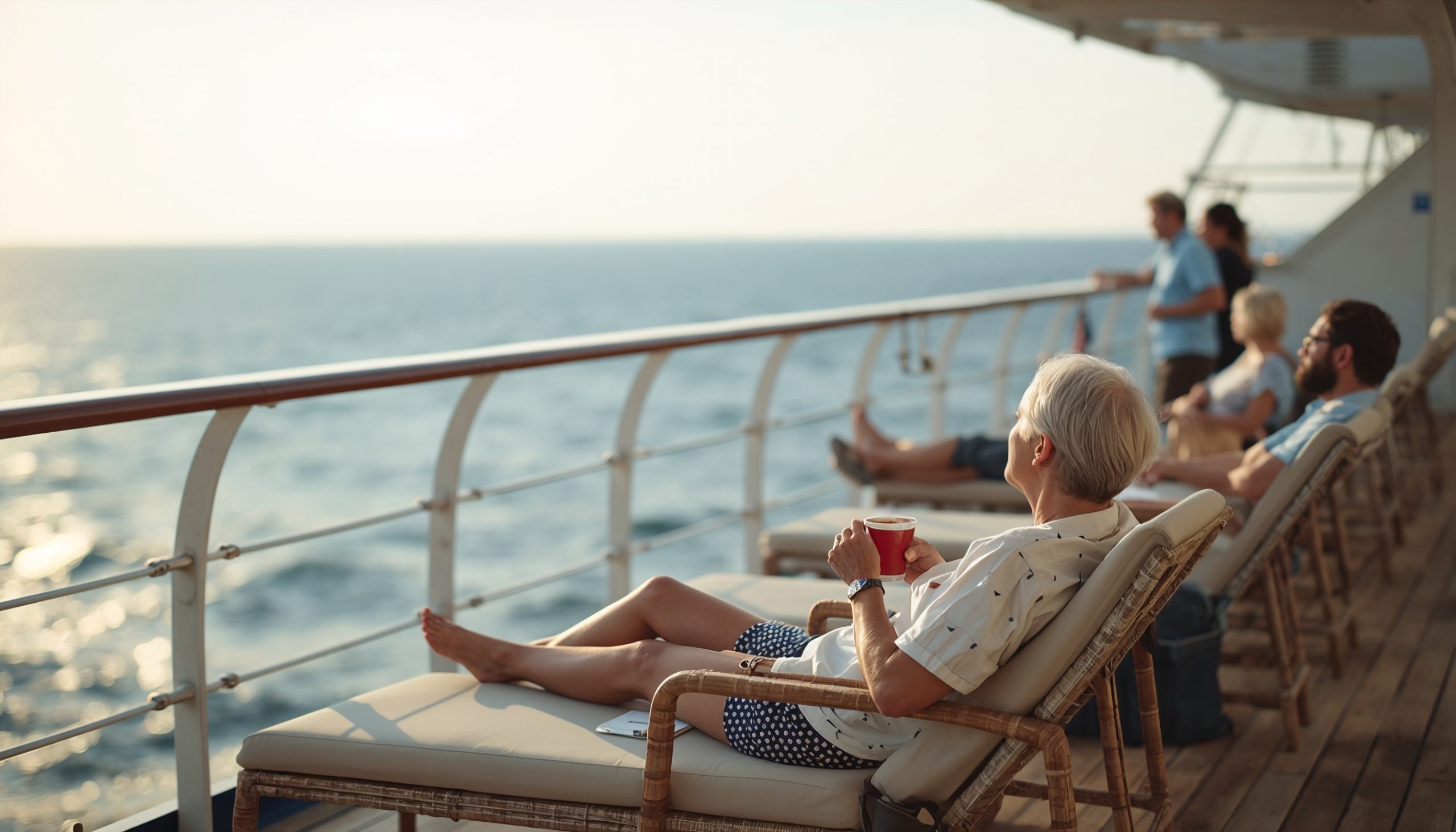
Lady enjoying coffee whilst relaxing on a cruise ship longer

You Don’t Have to Cruise Like Everyone Else

There isn’t one correct way to cruise.

Some people leave the ship in every port.
Some skip a few.
Some stay up late.
Some are on deck at sunrise.

Even within the same cabin, rhythms can differ. One person might be in the gym at 6am. The other might be lingering over coffee in a quiet lounge.

Cruise ships allow that flexibility.

You can spend part of the day together and part separately — and still share the experience.

You’re not behind if you skip something.
You’re not doing it wrong if you rest.

Cruising works best when it reflects your energy, not someone else’s.

And once you realise that, most of the common worries lose their power.

10 Things NOT to Do on a Cruise Ship Balcony

10 Things NOT to Do on a Cruise Ship Balcony

A cruise ship balcony feels like your own private slice of the ocean — a place for morning coffee, sunset views, or just a peaceful escape from the crowds. But while a balcony in cruise ship cabins can be paradise, there are some cruise ship balcony rules worth knowing. Break them, and you could end up starring in a cruise ship balcony viral video for all the wrong reasons.

Here’s what not to do if you want to stay neighbor-friendly, safe, and fine-free.

1. Don’t throw anything overboard
It’s illegal and dangerous. Tossing something from your balcony doesn’t just make it vanish — it can injure people below or harm marine life. If you’ve seen news about someone falling or things flying from a cruise ship balcony, you’ll know this is no joke.

2. Don’t blast loud music
Your neighbors didn’t pay for a front-row seat to your private rock concert. Remember that many guests use their cruise ship balcony at night to stargaze or just enjoy the ocean sounds in peace.

3. Don’t sunbathe nude
Balcony railings aren’t privacy screens. Unless you want to end up in someone’s holiday snaps — or worse, on a trending cruise ship balcony viral video — keep it covered.

4. Don’t smoke (unless permitted)
Most lines ban it, and fines are steep. Your neighbors don’t want your cabin doubling as a fog machine, and one flicked ember could land on a towel, setting off alarms. Search “cruise ship smoking on balcony” and you’ll see how quickly things can escalate.

Image by <a href="https://pixabay.com/users/nobleprime-42168322/?utm_source=link-attribution&utm_medium=referral&utm_campaign=image&utm_content=8547965">Nabil Maaizi</a> from <a href="https://pixabay.com//?utm_source=link-attribution&utm_medium=referral&utm_campaign=image&utm_content=8547965">Pixabay</a>

5. Don’t slam the balcony door
These cruise ship balcony doors are heavy. Slam it at midnight and you’ll wake up half the corridor. Think cannon fire — but less fun.

6. Don’t leave the balcony door open
Leaving it ajar switches off the air-con, invites humidity, and turns your cabin into a sticky steam room, especially when cruising the Caribbean. It’s one of the most common mistakes people make.

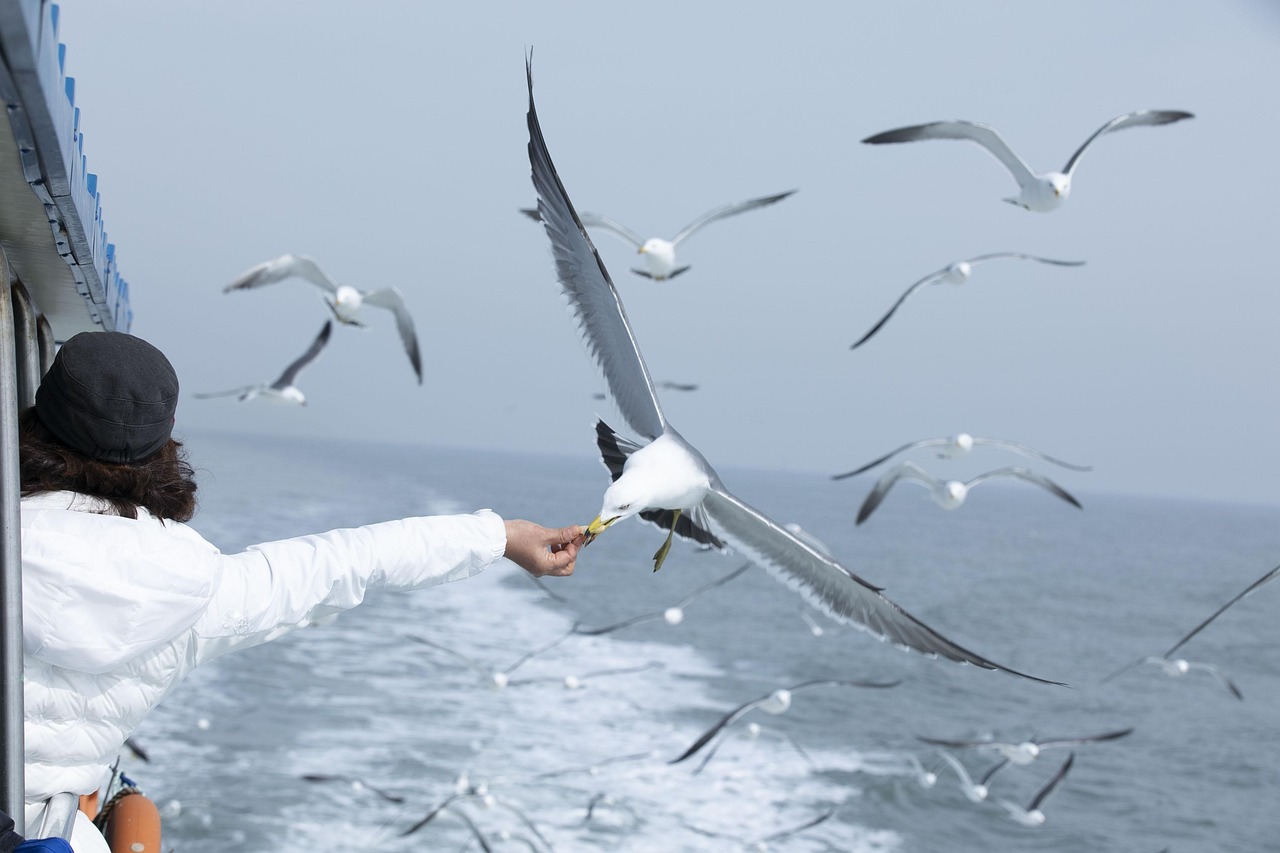
7. Don’t feed the seagulls
Toss a fry and suddenly you’re the star of The Birds 2. They’ll swoop onto your cruise ship balcony furniture and leave behind more than just memories.

Image by <a href="https://pixabay.com/users/jeejong58-9695293/?utm_source=link-attribution&utm_medium=referral&utm_campaign=image&utm_content=4795739">종덕 지</a> from <a href="https://pixabay.com//?utm_source=link-attribution&utm_medium=referral&utm_campaign=image&utm_content=4795739">Pixabay</a>

8. Don’t dry laundry outside
Balconies aren’t laundromats. Some cruisers even try rigging a washing line for cruise ship balcony cabins — but the wind will send your socks flying and your underwear onto someone else’s deck. Classy.

9. Don’t get too romantic
Yes, it happens. Just remember: reflective glass, neighbors leaning out, and cameras mean your “balcony moment” could quickly become another cruise ship balcony viral video.

10.Don’t climb or sit on the railing
This one’s deadly serious. Those “falling off cruise ship balcony” stories you’ve seen? Often it starts with someone perching where they shouldn’t. One slip is all it takes.

So there you have it — ten balcony blunders that can turn you from “cruise neighbor of the year” into “the one everyone gossips about at dinner.” Keep it classy, keep it safe, and your balcony will stay the peaceful little escape it’s meant to be. 🌊🍹

Want more cruise-smart tips?

Check out our cruise-tips and cruise gear pages to pack smarter, sail happier, and avoid rookie mistakes.

Explore Cruise Tips

Cruise Safety Tips: How to Stay Safe on a Cruise and in Port

Cruise Safety Tips: How to Stay Safe on a Cruise and in Port

Cruising is one of the safest and most relaxing ways to travel — but that doesn’t mean you should leave your common sense at the gangway. Whether you’re sailing the Caribbean, the Med, or somewhere more adventurous, it pays to know a few cruise safety tips before setting sail. From muster drills to dodgy taxi drivers, here’s how to keep yourself (and your cocktail) safe at sea and ashore.

1. Cruise Ship Safety: What You Should Know

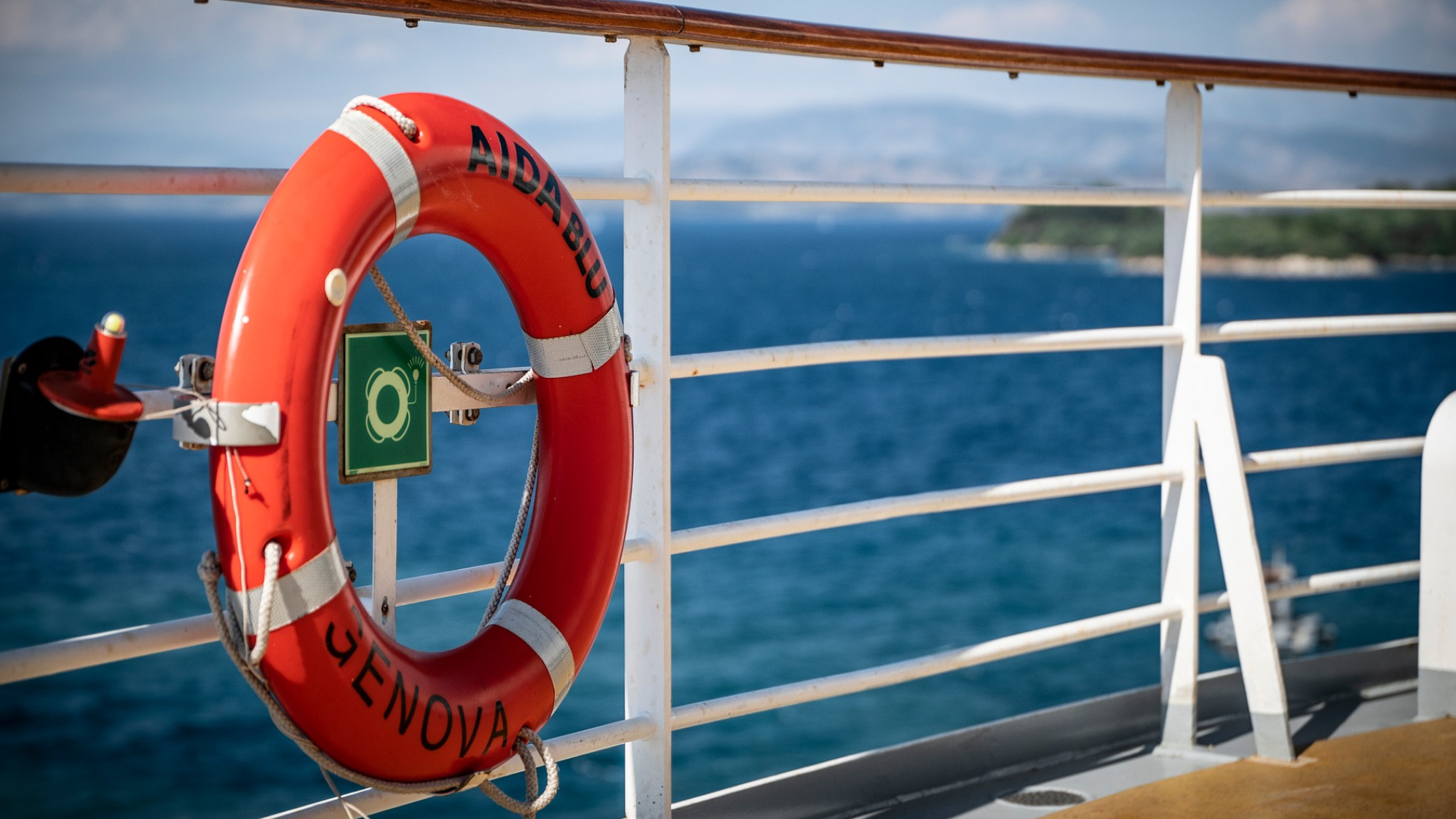
Every cruise begins with the safety briefing (a.k.a. muster drill). Yes, it’s dull, yes, it cuts into your sailaway buzz — but it’s essential. You’ll learn where to gather in an emergency, how to put on a lifejacket, and hear those all-important safety signals.

Behind the scenes, ships have some of the strictest navigational safety protocols in travel. Think: GPS, radar, trained bridge officers, and drills galore. Statistically, you’re far safer on a cruise ship than in a car on the motorway.

Pro Tip: Don’t skip the muster drill or “accidentally” arrive late. Crew take attendance — and you’ll get a one-on-one do-over if you try to dodge it. Awkward.

2. Onboard Safety Tips for Passengers

It’s easy to relax so much on holiday that you forget basic safety. Here are a few golden rules:

  • Balcony bliss, not balcony risk. Never climb railings or sit on ledges — you’d be surprised how many people do.

  • Fire safety first. Keep your balcony door shut; it helps the air-con work and prevents accidents.

  • Drink responsibly. A tipsy stumble near a staircase or railing is a recipe for disaster.

  • Listen to crew. If there’s an announcement or drill, take it seriously.

Pro Tip: Pack a small USB power strip (ship-safe, no surge protection). Not a “safety tip” in the traditional sense, but it keeps cables tidy and stops you tripping over chargers in the dark.

3. Health & Hygiene at Sea

A ship is essentially a floating hotel with a few thousand people onboard — and that means germs love it too.

  • Wash your hands often, especially before meals.

  • Use the hand sanitiser stations dotted everywhere.

  • Drink the water onboard — it’s purified and safe.

  • Don’t push through if you feel unwell; visit the medical centre early.

Pro Tip: Cruise veterans follow the “washy-washy, happy-happy” mantra you’ll hear crew sing at buffet entrances. It works.

4. Safety During Shore Excursions

Ports are where safety smarts really count.

  • Stick with licensed tour operators (book through the ship or a reputable local company).

  • Be wary of unlicensed taxis or “guides” who appear at the port gate.

  • Keep cash, cards, and ID secure — a crossbody bag or money belt works wonders.

  • Blend in. Flashy jewellery or waving your new iPhone about is like putting a neon sign over your head saying “tourist.” On one of our recent sailings someone has their ‘Rolex’ taken off their wrist when ashore.

4. Safety During Shore Excursions

Ports are where safety smarts really count.

  • Stick with licensed tour operators (book through the ship or a reputable local company).

  • Be wary of unlicensed taxis or “guides” who appear at the port gate.

  • Keep cash, cards, and ID secure — a crossbody bag or money belt works wonders.

  • Blend in. Flashy jewellery or waving your new iPhone about is like putting a neon sign over your head saying “tourist.” On one of our recent sailings someone has their ‘Rolex’ taken off their wrist when ashore.

Pro Tip: Snap a photo of your ship’s daily planner (or app schedule) before heading ashore. That way, you know the all-aboard time — and don’t risk watching the ship sail without you.

5. Common Cruise Scams to Avoid Ashore

Sadly, scams are as much a part of cruising as towel animals. Some to watch for:

  • Taxi tricks. Drivers “forgetting” to start the meter or quoting inflated prices.

  • Free souvenirs. Bracelets or trinkets that magically come with a demand for cash.

  • Beach chair drama. Someone renting you a lounger they don’t own, then the real vendor turns up demanding payment again.

Pro Tip: Always agree the price of taxis, chairs, or boat rides before you sit down. Once you’re comfortable, your bargaining power is gone.

6. Emergency Preparedness

Cruise ships are safe, but things can still go wrong:

  • Miss the ship? Find the port agent (details are in the daily planner). They’ll help you catch up at the next port.

  • Lost passport? Contact your embassy/consulate right away. Always carry a copy of your passport on your phone.

  • Medical issues? The onboard medical centre is open 24/7 — don’t wait it out.

7. Cruise Parking & Pre-Boarding Safety

If you’re driving to port, don’t let your trip start on a sour note.

  • Use official cruise parking or reputable lots — they’re well-lit, monitored, and often have shuttles.

  • Beware of too-good-to-be-true promo codes floating online. Some lead to dodgy, unsecure car parks.

  • Take valuables out of the car — glove boxes aren’t safes.

Conclusion

Cruising is one of the safest vacations you can take, but a little awareness goes a long way. From washing your hands to double-checking taxi fares, these small steps keep your trip stress-free.

Planning a cruise soon? Don’t forget to check out our printable Cruise Packing List below,

How to Avoid Embarkation Day Chaos

How to Avoid Embarkation Day Chaos

9 Tips for Smooth Sailing

You’ve booked the cruise, packed your bags, and counted down the days — now embarkation day has finally arrived. But instead of a glamorous red-carpet moment, the first few hours can feel like a cross between airport security and a theme park queue. Don’t worry: a little planning goes a long way. Here are our top tips to dodge the chaos and start your holiday as it should — cocktail in hand, stress in the bin.

1. Arrive Early (But Not Too Early)

Yes, you’re excited. Yes, you want to be first in line. But showing up three hours before your assigned check-in slot will only make you one with the masses. Stick to your boarding time, or if your cruise line allows, aim for late-morning when queues often move faster.

2. Have Your Documents Ready

Boarding passes, passports, vaccine cards (if required), travel insurance — keep them in one handy folder or wallet. Nobody wants to be “that person” fumbling through bags at the counter while the line grows behind them.

3. Use the Cruise Line App

Most cruise lines now use their apps for check-in, health forms, luggage tags, and boarding passes. Download it before embarkation day (terminal Wi-Fi is as reliable as a chocolate teapot). Having everything pre-loaded saves time and stress.

4. Hand Off Your Bags Like a Pro

Cruise porters will take care of your larger luggage, but only if it’s tagged up properly. Print and attach your luggage tags before you leave home (trust us, tape jobs at the curb are chaos). And always keep a carry-on with the essentials — swimsuit, sunscreen, meds, chargers — so you can hit the pool or the bar while the rest of your stuff makes its way to your cabin.

5. Avoid Peak Arrival Times

Early afternoon is when everyone and their nan shows up at once. If your schedule allows, aim for late morning or mid-afternoon. You’ll still be onboard in time for lunch without the shoulder-to-shoulder crowd.

6. Bypass Bottlenecks with a Carry-On Strategy

Security checks can be slow if you’ve packed liquids or electronics haphazardly. Keep anything that needs scanning (toiletries, tech) easy to grab, just like at the airport. Bonus: no frantic rummaging.

7. Take Your First Ship Selfie Later

We get it — you’re excited! But the gangway is not the place to start a photoshoot. Step aside, get onboard, and then grab that Insta-worthy shot once the crowds thin.

8. Head Away From the Herd

Once you’re onboard, don’t follow the lemming trail straight to the buffet. Go explore quieter spots: pool deck loungers, an overlooked lounge, or even your muster station check-in. The buffet will still be there in 30 minutes, minus the mosh-pit vibe.

9. Keep Calm and Muster On

Speaking of muster drills — do it as soon as you can. Some lines let you check in at your station right away via app or crew scan. The quicker you tick that box, the quicker you can sip your sail-away drink without interruption.

Final Thoughts

Embarkation day doesn’t have to feel like a stress test. With a little prep, you’ll be gliding through security, boarding with ease, and sipping that first fruity umbrella drink before most passengers have even found their cabins. Remember: the cruise starts the moment you let go of the chaos.

Cruise Sea Sickness

Cruise Sea Sickness

Introduction

Ah, cruise seasickness: the unwanted companion on your maritime adventure. Imagine you’re on a luxury cruise, cocktail in hand, when suddenly your stomach feels like it’s riding a roller coaster. Welcome to the wobbly world of seasickness! Let’s navigate the choppy waters of understanding what cruise seasickness is, why it insists on ruining your buffet plans, and how you can show it the plank.

What is Cruise Seasickness?

Cruise seasickness is like that annoying party guest who wasn’t invited but shows up anyway. It’s the body’s way of saying, “I’m not on board with this whole ‘swaying ship’ situation.” It happens when your inner ear, eyes, and deeper body parts can’t agree on whether you’re moving or not. While your inner ear detects the ship’s motion, your eyes might not see it, leading to a confusing party in your brain and, well, sometimes an uninvited mess on the deck.

Symptoms

  • Nausea: When you feel like the ocean waves are in your stomach.
  • Dizziness: When the room spins more than the dance floor at the ship’s disco.
  • Vomiting: The less said about this, the better.
  • Cold sweats: When you’re as clammy as a clam.
  • Headaches: Feels like the ship’s horn is going off inside your head.
  • Fatigue: Because battling an invisible wave monster is exhausting.

Causes of Cruise Seasickness

  1. Vestibular System Discrepancy: It’s the clash of the titans: eyes vs. inner ear. The inner ear senses movement, but the eyes just don’t see it. Result? Seasickness.
  2. Stress and Anxiety: Thinking too much about getting seasick can actually bring it on. It’s like inviting that party crasher into your cabin.
  3. Position on the Ship: Your location on the ship can make a big difference. Staying in the belly of the beast (aka lower decks) often means less sway and more play.

Minimizing Cruise Seasickness

Behavioral Strategies

  1. Cabin Selection: Choose a cabin midship on a lower deck. It’s like the eye of the storm: calm and peaceful.
  2. Horizon Gazing: Find the horizon and stare it down. Show it who’s boss and keep your inner balance in check.
  3. Fresh Air Fiesta: Step outside, breathe in, and let the ocean breeze fight the quease.
  4. Screen Time-Out: Put down the phone or book. Your brain has enough to process without the latest episode of your favorite show.

Dietary Measures

  1. Hydration Station: Keep the fluids coming (non-alcoholic, sadly) to avoid dehydration, which is like throwing gasoline on the seasickness fire.
  2. Bland Buffet: Stick to foods that won’t rock the boat—think crackers, toast, and other stomach settlers.
seasick, sailing, boat

Remedies and Preventive Measures

  1. Over-the-Counter Heroes: Medications like Dramamine and Bonine can be your best mates in battling the seasickness beast.
  2. Patch it Up: Scopolamine patches are like magic stickers that keep nausea at bay.
  3. Ginger and Peppermint: Nature’s way of saying, “Take that, seasickness!” They can calm your tummy turmoil.
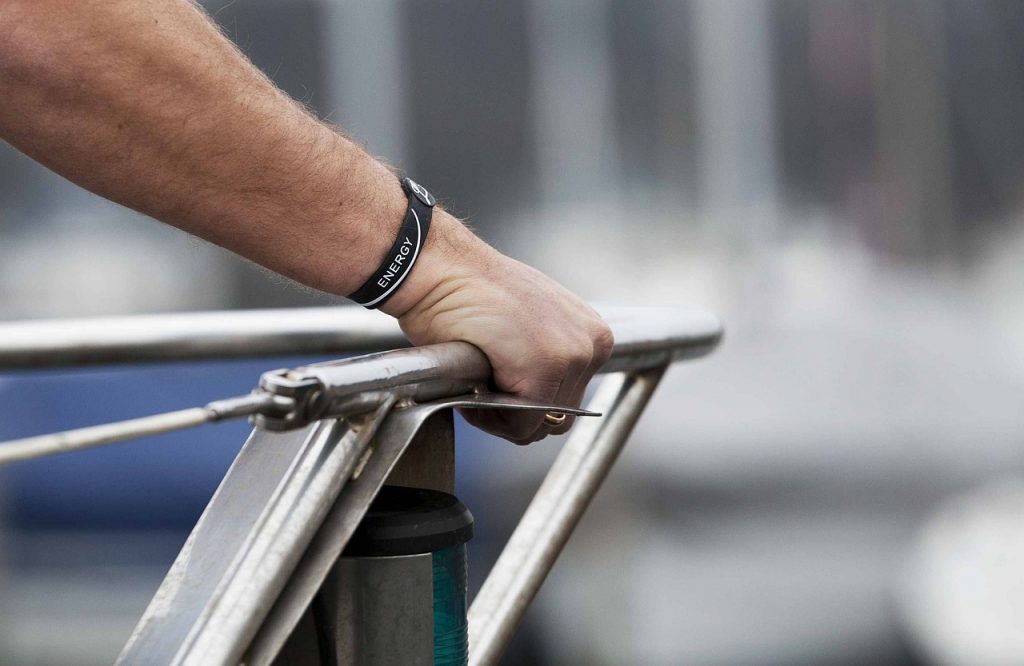
  4. Acupressure Wristbands: These fashion statements might just press the right buttons to keep nausea in check.

Conclusion

While cruise seasickness might seem like a determined party crasher, armed with the right strategies, you can turn the tables and keep the fun in your cruise. Remember, a well-prepared sailor can weather any storm, or at least not get sick from it. So, gear up with your remedies, pick the right spot on the ship, and keep your eyes on the horizon—your cruise is meant to be enjoyed, not endured!

Get Your FREE Cruise Packing List

Pack like a pro! Subscribe and we’ll send you our printable cruise packing checklist plus handy cruise tips.

No spam, no inbox overload — just useful cruise inspiration.

Anchors aweigh! You’re officially part of the Escapaders crew 🎉